I made a lot of lists prior to coming to college. My largest and most detailed one was what I was bringing to college. Making this list of what I already have while I'm here brought me back to the month before college when I was actually making those decisions. It also makes me think of just how much stuff I really have...
Bedspread/pillows, Clothing, Shoes, Jewelry, Jewelry holder, Pet fish, Food, How water heater, Ruler, Book bag, Water bottle, Scissors, Notecards, Rubber bands, Calculator, Letters, Stamps, Bulletin board, Pictures/frames, Scarves, Medicine, Razors, Face wash, Shampoo/Conditioner, Blanket, Suitcase, Books, Tape, Paper clips, Checkbook, Rug, Printer, Laptop, Headphones, Blowdryer, Straightener, Curling iron, Iron. Laundry Detergent, Tide-to-go, Lint collector, Deodorant, Lapdesk, Book light, Wastepaper basket, Laundry basket, Poster, Mattress pad, Coats, Gloves, Hats, Shoe holder, Boxes, Calendar, Push pins, Paper, Lamp, Power strip... I'm sure I probably forgot something, but anyway, that's a lot of stuff!!!
Tuesday, October 19, 2010

Monday, October 18, 2010
Avatar: Pocahontas Recreation?
A few weeks ago, before AmCon really got into discussing Pocahontas, me and a few Hoyme friends watched the movie Avatar. I'm sure most of you have seen it so I won't get into the plot, but anyway, it's a great movie! One of my friends watching the movie with me brought up the striking similarities between Avatar and Pocahontas though, and at first I didn't understand. What similarities? The fact that it's a love story?... Then he showed me this page on the internet, and I began to think that maybe James Cameron wasn't really the genius that we all thought him to be- maybe just someone who watched a lot of Pocahontas. Read for yourselves!


Pocahontas: Part II
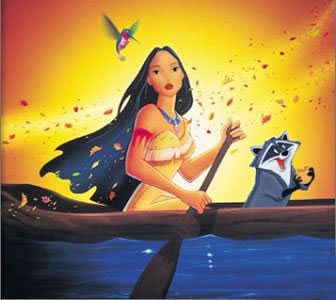
We've spent a good amount of time in class discussing Pocahontas. On Wednesday, we talked about the different images of Pocahontas and how artists have portrayed her. I've come to the conclusion, as I'm sure many other students have, that we really don't have any clue to how she looked. Because I grew up thinking that a Disney movie was the most accurate representation, I now wonder how much of her appearance in the movie could be accurate at all. Certainly, she had dark hair and eyes, and a thicker build, but almost everything else is just guesswork. For one, I've now learned that Pocahontas would not have had a mature adult body because she was only around 10 years old when she met John Rolfe. The Disney movie portrays Pocahontas as being this beautiful, statuesque Indian woman, but I feel as though the only thing we really know about her is that she is Indian.
For me, this makes Pocahontas even more confusing. Now, not only do we not even know what she actually did or what type of person she was, but we also have no clue as to what she looked like. Looking at the engraving of her in 1616, the only image of her during her real life, I become truly puzzled as to what image should come to mind when I think of Pocahontas.


For me, this makes Pocahontas even more confusing. Now, not only do we not even know what she actually did or what type of person she was, but we also have no clue as to what she looked like. Looking at the engraving of her in 1616, the only image of her during her real life, I become truly puzzled as to what image should come to mind when I think of Pocahontas.


^Huh?^
Monday, October 11, 2010
Pocahontas: The Legend
Reading about Pocahontas made me think about how little actually know about her, but how she is widely regarded as one of the, if not the most famous, American Indian woman. Why is this? We discussed this a little in class but I wanted to branch off of it a bit. During class, I was trying to think of different reasons for why she was and still is relevant and important in today's American culture. I came to a few conclusions:
1) Americans are eager to romanticize stories about the formation of our country.
2) The story of Pocahontas shows both Englanders and Indians in a good light.
3) Pocahontas is also a love story.
I think that ultimately, the story has drama to it. It has been enhanced by the Disney film of course, but the real story itself does contain a lot of controversy. The aspect that seems to make it popular is what I would call "positive" controversy. Pocahontas has become not only a character in a Disney film, but also a symbol, and icon, just as we discussed in class. She can be understood in many ways.

1) Americans are eager to romanticize stories about the formation of our country.
2) The story of Pocahontas shows both Englanders and Indians in a good light.
3) Pocahontas is also a love story.
I think that ultimately, the story has drama to it. It has been enhanced by the Disney film of course, but the real story itself does contain a lot of controversy. The aspect that seems to make it popular is what I would call "positive" controversy. Pocahontas has become not only a character in a Disney film, but also a symbol, and icon, just as we discussed in class. She can be understood in many ways.
Tuesday, October 5, 2010
"Liberty"
In the picture of the female figure with the Phrygian cap, I think that the cap essentially represents freedom and liberty. I like the article we read about the transformation that this piece has gone through. In the beginning, the Indian Queen represented America. She was a "nude woman warrior decorated with feathers and usually accompanied by an exotic-looking animal, a bow and arrow, and the odd severed limb nearby." To me, the picture shows America's resistance to England because this is displaying the most "Indian" characteristics of the the transformations. Eventually, the Indian Queen would turn into a "slender white princess." This picture, to me, invokes Deloria's idea of "playing Indian." With the woman dressed in a feathered headdress and skirt, she is crossing both English aspects with Native American aspects. Also, the woman perhaps even became more attractive over the years, which I found interesting. And, her name changes from Indian Queen to Columbia. There are still Native American hints found in Columbia- I'm excited to discuss these aspects in class as well as how and why it evolved.
Pueblo Landscape~New England Landscape~St. Olaf Landscape
My ORC group discussed on Monday how St. Olaf had more similarities to the Pueblo Landscape than to New England Landscape. I think that in reality, St. Olaf is a good mix of both. In Pueblo Landscape, the focus was on nature and not separating the people from it, but bringing them closer to it. In contrast, the New England Landscape were more in awe of nature and didn't try to incorporate nature into their Landscape, but they still appreciated it. Pueblo schools used nature and play in ordinance with their teachings, but New England schools kept both school and play separate. Looking back at both, I'm not exactly sure who had it right. But I don't think it's a question of whether one group did things "right" or not... It's more a question of how both Landscapes are still used today. At St. Olaf, I see the beauty of the nature around our campus- trees everywhere and the natural lands surrounding the campus- but ultimately, the classrooms are in buildings where we are meant to learn. I feel like St. Olaf ultimately appreciates the beauty of our landscape, but doesn't regard it with the same importance that the Pueblo Indians did.
Sunday, October 3, 2010
Settling In
Now that I've spent over a month at St. Olaf, I've had some time to reflect on what transitions I have gone through during this time.

My experience here is like no one else from my high school class... But yet I am so happy that I chose to come to school here. I really can't imagine college anywhere else. There is no one here from my hometown and it's been such a blessing in disguise. Don't get me wrong, I miss all of my friends every day and wish that I could bring them here, but everyone that I spend time with here is completely new to me, and it's so refreshing just talking to each person. Prior to coming to Olaf, I knew that this would be the perfect situation for me. I am an independent person who wanted the opposite of my hometown, where I knew the names of everyone in my school. In my hometown, I didn't HAVE to branch out to anyone because everything was right there and people practically thought that they knew me better than I knew myself. So many people never branch out...but it was important to me to meet new people and see new things because I think that that is essential for new ideas to be formed. If I had advice to give to students at my high school, my underclassmen friends, or even my younger sister, I would tell them to choose a place where you won't have to rely on anyone else. In the future, you will have to make decisions that will dictate the course of your life. Make those decisions on your own, without clouded judgement from someone else.

Subscribe to:
Posts (Atom)